Youth.ai
Mental Health and Artifical Intelligence
Mental Health and Artifical Intelligence
Mental health issues are a growing concern among school children in Singapore, with 8% of primary school students and 12% of secondary school students experiencing issues like anxiety and depression. In addition to tracker-based apps, schools and educators should provide in-person support and resources to address these issues. Youth.ai aims to provide a robust, inclusive and preventative technology for detection of mental health issues.

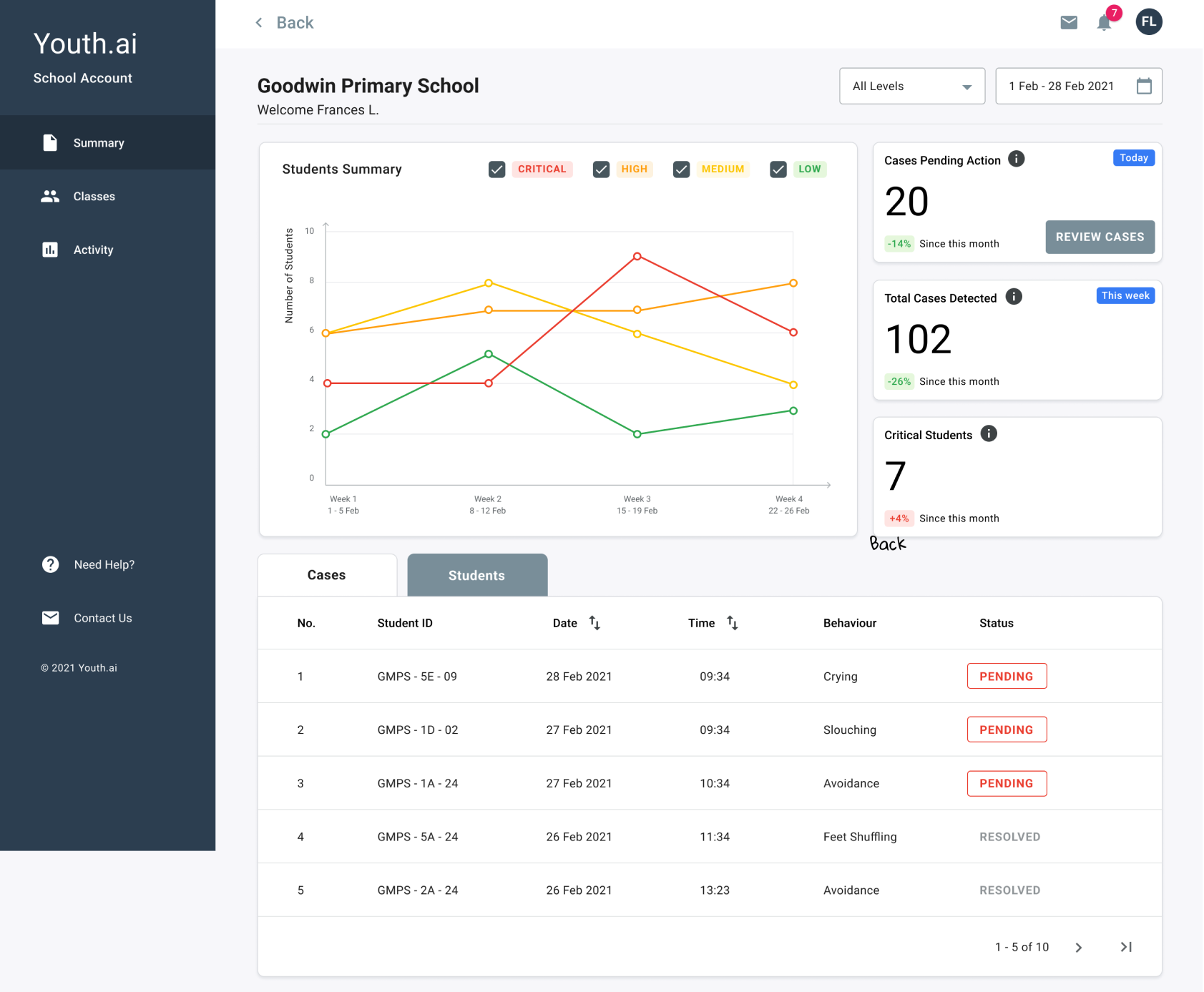
Our team is working to develop a dashboard for the Report Phase of the Youth.ai screening process. During this phase, data is collected and cases of abnormal behavior are categorized into high, medium, or low risk levels that can be accessed by school administrators and Youth.ai admin centers.
It is a crucial responsibility for admins to verify these cases, as the AI is being continuously trained to improve accuracy.

Our Project Timeline
To kickoff our design process- we decided to do secondary and primary research to understand the context of mental health in Singapore as well as the real-life attitudes and opinions of teachers in several MOE schools. The key insights are highlighted below.
Research insights were captured through personas representing primary, secondary research. We developed two personas to capture both admin (Youth.ai-side) and counsellor (school-side) personas.


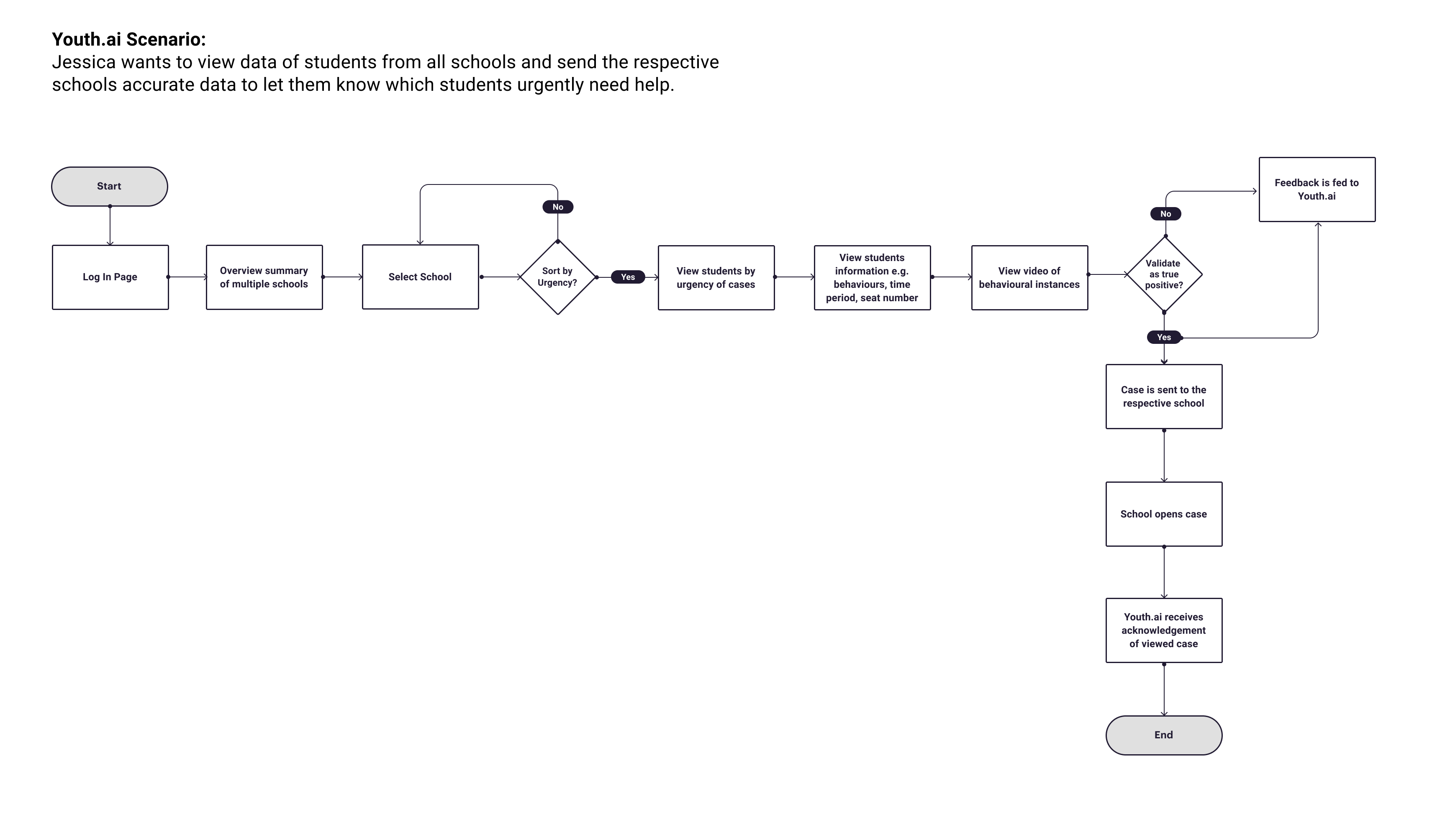
Next, we mapped out both person's user journeys based off the pain points and goals of our personas, whilst using the Youth.ai software.

Since Youth.ai's software was our solution and its mission was very clear to us in the beginning, it was not a challenge to define a solution as it was already provided for us.
We had to streamline our interface design however, that came with its own challenges we sought to solve.To Define our problem statements, we used "How Might We" Statements to address our persona's goals and relieve pain points.
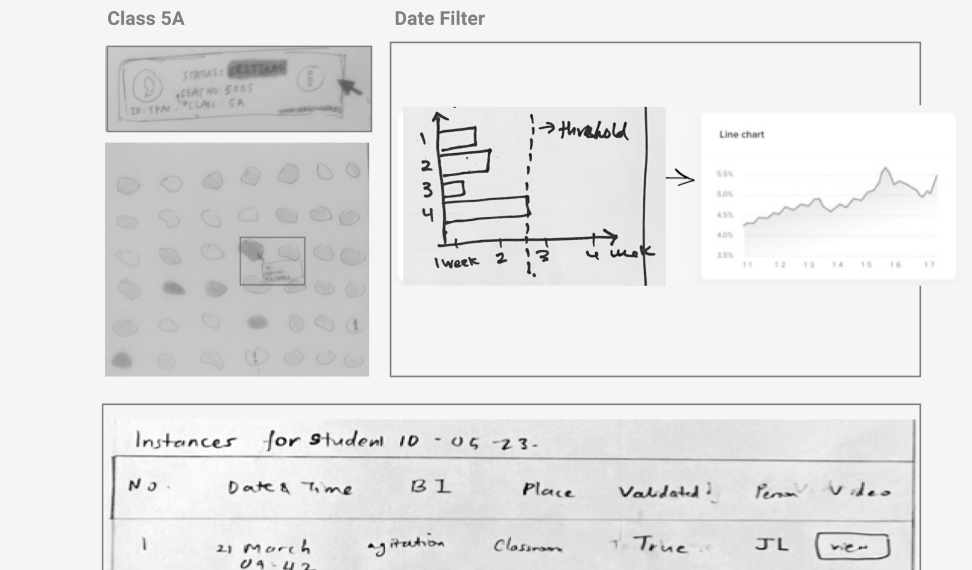
Our team sketched and discussed some very complex ideas and threw all our ideas together. Brainstorming saved us time and helped us make decisions unanimously for the rest of the process as discussions helped streamline our direction.


The key to the good collaborative success was ensuring that all our team was aligned on the fundamental elements for collaborative- remote designing. The dashboard was designed to be scalable and flexible for the Youth.ai team. Since this was a project built from scratch, our foundational system had to include all potential UI elements. This foundation supported the brand logos, grid systems,typography scales, color systems, graphs and even widgets.


To Test our dashboard, we did 2 rounds of usability testing. We used task-based testing to see how many users failed or succeeding at performing key activities that the users will actually perform when the dashboard is live. Our tester's pool was limited as the project was to be piloted at select few schools only.
We had 5 teachers and 3 admins from the Youth.ai team. We did 2x rounds of usability testing for the two groups.
Key Tasks Were :
1. Find Where and Who are the most Critical Cases
2.Find Which Behaviours Occured More Frequently Across Classes.
3.How To Validate/Invalidate Cases


When compared to Test 1 - both Admin and School dashboards fared better in terms of overall average task ratings.
Also, SUS scores increased by 6%. There were no failed tasks.
Our Prototype seemed to do better after the iterations.
Our small, limited pool of usability testing participants did not yield much statistical significance, as we expected.However, we decided to iterated our design based on common feedback amongst our participants that was high on severity levels and urgency.


